
Small Axe
"The mills of the gods grind slowly, but they grind exceeding fine" (Sextus Empiricus)


The Small Axe Proverb
There is a Caribbean proverb that declares “If you are the big tree, we are the small axe”.
The big tree is the State’s institutionalised oppression and includes its systemic racism, economic inequality and sanctioned violence and all have a common denominator; they are protected by legal, political, and financial networks operated by the State. To the single individual, they appear permanent, unyielding and unbreakable but to a movement of committed people, they are not. The anthropologist Margaret Mead’s famous saying is apposite; “Never doubt that a small group of thoughtful, committed citizens can change the world. Indeed, it is the only thing that ever has”.
The proverb is a blueprint for organised, persistent, grass-roots social movements to successfully, if gradually, overcome entrenched oppression.
The Proverb was written about by Bob Marley who in 1970 wrote a best selling song entitled “Small Axe” in collaboration with Lee Perry who released it in that year. Bob Marley and the Wailers released their version on their album “Burnin’” in 1973. The proverb was brought to the UK by migrants from the Caribbean starting with the Windrush generation who migrated to the UK as a result of a campaign by the UK government which needed more workers to help run the NHS, transport and to fill the employment gaps in other trades. It should be noted that the Windrush generation did not anticipate the hostility they would face in the UK.
In the 1950s the proverb also spread to the civil rights movement in the USA.
In 2020 Steve McQueen created, co-wrote and directed a television anthology called “Small Axe” that consisted of five films each telling a story about the everyday experiences of West Indian immigrants in London from the 1960s to the 1980s.
The Small Axe Strategy
Grassroots activism cannot match the power of the State so it does not attempt to do so. Instead, it relies on continuously targeting a particular pressure point.
Focus on Local: Modern movements often begin with a single community organising against a specific injustice, such as a corrupt local policy or an instance of police brutality.
Digital Amplification: Social media allows local Axes to connect with other areas of a country and even globally. A single hashtag or local protest can amplify a message and transform a community action into an international movement. The Black Lives Matter and Me Too hashtags are good examples.
Pressure: Small Axe activism relies on persistently targeting a particular pressure point whether that be a policy or an individual. Such pressure might be brought to bear through the use of boycotts or legal challenges.
The Small Axe Successes
The Small Axe methodology has successfully dismantled oppressive systems throughout history and in many countries; here are just some examples:
The Montgomery Bus Boycott
A 381-day protest by citizens of Montgomery, Alabama led to the US Supreme Court ruling that outlawed racial segregation on public buses.
The Anti-Apartheid Movement
Apartheid became law in South Africa in 1948 and was quickly followed by Acts that banned mixed marriage, forced citizens to register and be racially classified and forced physical racial segregation by creating different residential and business zones for different races. The anti-apartheid movement began as local student protests and acts of resistance. It grew to become a global protest movement that by means of sanctions on all things South African, forced the resignation of FW De Klerk in 1996, toppled the apartheid system entirely and in the first full and free election since 1948, elected Nelson Mandela as President. That year, the global community re-admitted South Africa and white South Africans as members of the Human Race.
The Mangrove Nine
The Mangrove was a restaurant in Notting Hill, London in the late 1960s. One evening as the venue was closing, a Metropolitan Police officer accused the owner of running the place as a front for drug dealing, gambling and prostitution. Over a period of days, the officer organised and led a series of violent raids on the Mangrove.
The local community rallied in support of the Mangrove’s owner and conducted a march to protest against police brutality and racism. In response police deliberately provoked violence and a number of protesters were arrested. A number of protesters were charged with minor offences. A year later, nine of the protesters were charged with riot and affray.
At the trial, the Mangrove Nine pleaded not guilty and made race the key issue. Police officers fabricated their stories and evidence and committed perjury. All the while in the days leading up to the trial, the local community continued with its Small Axe strategy of publicising the case to put pressure on both police and justice officials. A jury acquitted five of the accused including the owner of the Mangrove and the judge, despite initially being biased in favour of the police and prosecution team, gave extremely light sentences to the four who were found guilty.
Metropolitan Police
Small Axe grass-roots activism has forced the Metropolitan Police to admit it was institutionally racist and forced it to accept the required changes to remove its racism though these are far from fully implemented. The outrageously biased Stop and Search statistics illustrate that the Force’s racism is far from eradicated for example.
UK Justice System
The institutional racism in the British justice system as a whole does seem to be a particularly a hard nut to crack but activists have successfully persuaded the new UK Prime Minister to abandon the ludicrous proposals to abolish jury trials which certainly would have introduced racism as a factor in some judge-only trials while not reducing the judicial backlog. For what it’s worth, I believe that because around 20% of the UK population is undeniably racist, testing for racial bias must be part of the jury selection process.
The Transatlantic Slave Trade
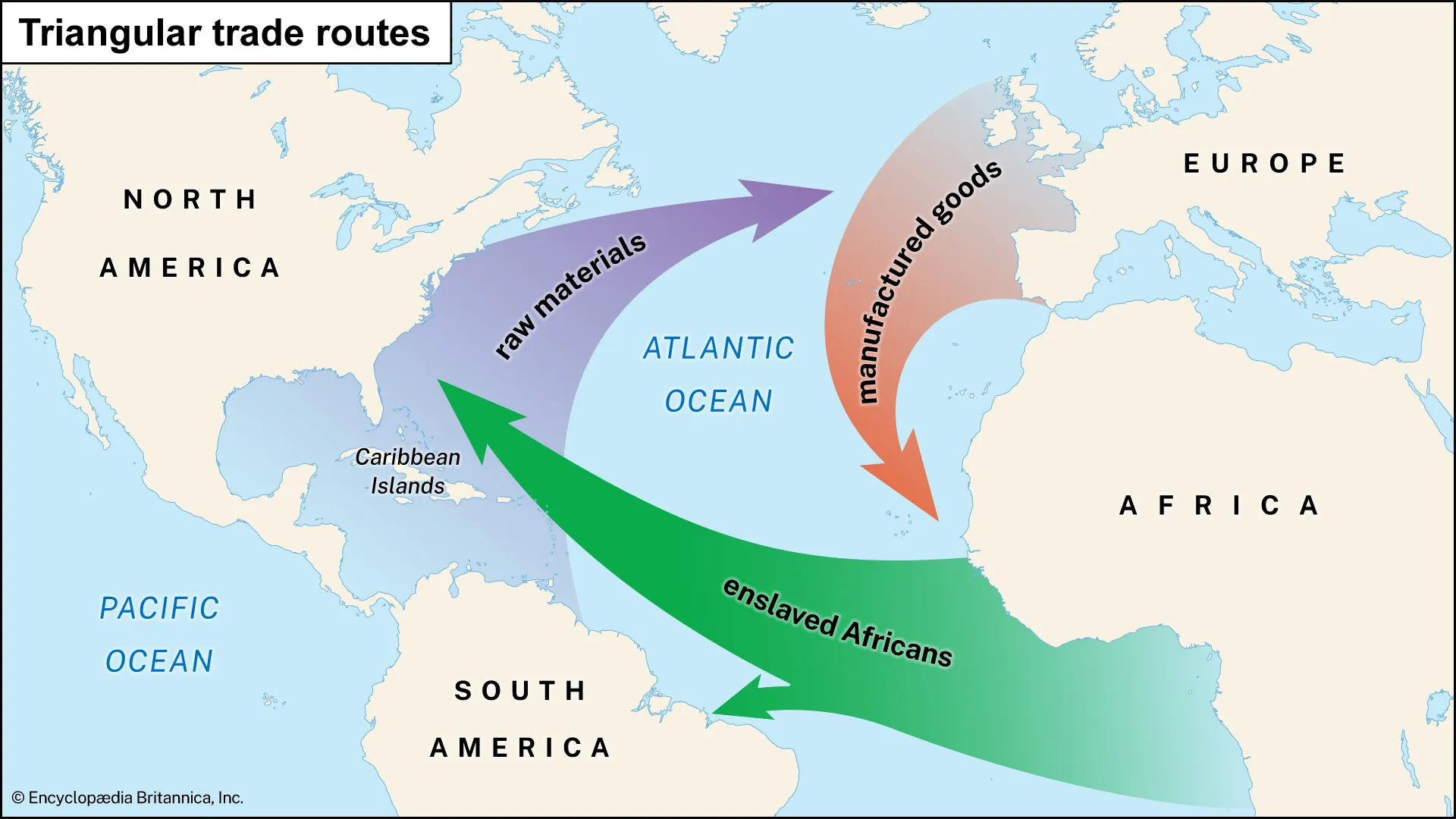
Small Axe strategy has been successful in persuading UK governments to make formal apologies for Britain’s part in what can be described as a trade in human misery. However, so far, successive governments have refused to mandate monetary reparations to the descendants of former enslaved people but, and let’s be crystal clear about this, 000s of former slave owners made a fortune first from their enslaved workforce and then from the compensation paid to them, the former owners of the enslaved, when the slave trade was abolished and the Emancipation Act was passed in 1835.
Economists estimate that the compensation paid to former owners is the equivalent of between £16 billion and £17 billion today but the government of the day paid no reparations to the former enslaved peoples themselves. Talk about a blow upon a bruise. The descendants of those former slave owners now live in privileged, entitled luxury on the proceeds of 191 years of profitable investment of that compensation as well as capital that was built from the profits made from having an unpaid workforce.
Phew! I’ve known this stuff for years yet every single time I re-read for essays such as this, I’m always stunned by the injustice of it all - I am literally fucking raging as I write this and it never. goes. away. And I’m fucking white for fuck’s sake! if it doesn't anger you then you have no soul, no empathy, no hope and you might very well be a psychopath.
For those unfamiliar with sheer evil of the triangular transatlantic slave trade checkout footnote1, you’ll be gobsmacked.
I’ll begin to close this section finish this powerful quote from “The West Wing”, that vision of what an ideal presidency would look like:
“The chief economist at the Manchester Institute, calculated the number of slaves held, multiplied it by the number of hours worked, multiplied that by the market value of manual labour and came up with a very conservative figure; 1.7 trillion dollars. Your economic baseline didn’t come from hard work. It came from four million slaves who worked for 250 years, for no wages. My great-grandfather was bought for 300 dollars. He worked a cotton field in Mississippi for 50 years. His labour, and the labour of millions of others like him, built this country, so someone owes me and my friends 1.7 trillion dollars.”
And right there is probably the real reason UK governments refuse to entertain the idea of monetary reparation; we simply can’t afford to pay it without going after the descendants of the former owners of the enslaved, or so we’re told - but dear reader, have another look at footnote 1 and examine the financing carefully; if we could find billions to finance the Napoleonic wars and to pay compensation to owners of former slaves, we could find the billions to make reparations to the descendants of those former slaves and yes, fucking right we should go after the descendants of former owners of slaves who live on the investment profits of this blood money. Oh and please don’t give me that bullshit argument that “we can’t blame today’s generation for the actions of their ancestors”. Of course we can’t, and I don’t, but that doesn’t stop today’s generation from continuing to live in luxury on the profits of what their ancestors did while many of the descendants of former slaves live in poverty. The connecting thread is centuries long now.
Small Axe reminds us that justice is rarely handed down from the top. It is chipped away from the bottom and by focusing on collective, local grass-roots actions, ordinary but committed people have the power to reshape society.
I leave this section with this gem; there are still some UK citizens who are descendants of owners of former slaves who remain the owners of large plantations in the Caribbean and continue to make money from them to this day. One prime example is the former Tory MP Richard Drax.
Small Axe Summary
The Small Axe approach has shown that Caribbean migrants can be successful in changing law and societal attitudes in face of seeming impossible odds.
The Small Axe strategy of grass-roots activism has been adopted by other minority groups who have been scapegoated and demonised by the State and by “mainstream” right wing thinking including most notably LGBTQIA+ people
The Small Axe strategy is the most effective way of effecting change and should be adopted by, for example, Palestinian Action and Climate Change advocates including Just Stop Oil.
The Teaching of Critical Race Theory in UK schools
A significant reason why the issue of slavery reparations receives so little coverage by the UK’s fourth estate is that the UK populace is largely ignorant and disinterested in the subject. Why might that be? I contend it is because historical truth is not taught in UK schools because the teaching of Critical Race Theory is effectively banned by the UK government.
The Government Position
The stance of successive UK governments2 regarding the teaching of Critical Race Theory (CRT) has been ambivalent at best and hostile at worst. CRT is not formally listed or mandated as a subject on the national curriculum in UK schools though elements that touch on it are discussed by teachers and their pupils. However teachers are forbidden from teaching “partisan political views or presenting contested theories as factual absolute truths”. This leads to teachers shying away from teaching pupils even parts of CRT for fear of being disciplined or worse.
The government’s guidance is a flawed imperative. CRT is not a political ideology, it is history and by arguing that CRT is partisan and a political ideology, governments are effectively banning the teaching of real history (aka stuff that actually happened) preferring their comfortable, and white oriented airbrushed (whitewashed?) version (aka stuff that didn’t actually happen but that makes us feel better).
If the UK government were to make the teaching of CRT mandatory and part of the national (probably history) curriculum and make it a subject not possible for pupils to drop then all schools in England and Wales would have to teach it, both Private fee-paying and State, both selective and non selective and including all faith based schools - there could and should be no exceptions.
Organisations Supporting the teaching of CRT in Schools
The following3 are in favour of the teaching of CRT
Successive UK governments’ strict stance on political debate has been challenged by teachers’ unions, anti-racism groups, legal groups, and academics. Critics argue that government guidance is restrictive, misrepresentative of CRT and stops teachers from debating systemic racism with their pupils.
Grassroots and Legal Coalitions
The Coalition of Anti-Racist Educators and Black Educators Alliance groups have launched legal challenges against Department for Education (DfE). In them they argue that government rules banning materials that for example promote so called “victim narratives” or apprise capitalism constitute an assault on free speech and prevent students from understanding structural inequality and how it came about. Such legal pressure previously forced the DfE to review its curriculum guidance.
The Black Learning Achievement and Mental Health (BLAM UK) group campaigns against the government’s stance and argues that omitting terms like “systemic racism” from the curriculum whitewashes history. They resist this by means of grass-roots activism and legal challenges and demand thatanti-racism and racial literacy training for teachers be made mandatory.
Education Unions and Think Tanks
The National Education Union, the UK’s largest teaching union, criticised the DfE’s Political Impartiality guidance. It stated that the rules add unnecessary layers of complexity and make teachers fearful of navigating topics such as race, colonialism, and climate change.
The Runnymede Trust
The trust is a respected race equality think tank and has consistently challenged the government’s framing of anti-racism teaching. Its research highlights that a large majority of history teachers want to be able to fully teach pupils about the British Empire, colonialism and migration arguing that the government’s so called “balanced” mandates stifle debate.
Academic Experts
The University College London (UCL) Education Institute has supported protests against political interventions in the classroom. It has accused politicians of misrepresenting CRT to create a culture war. It argues that proscribing academic resources damages intellectual freedom.
Arguments for the Teaching of CRT
Proponents state that the current history curriculum does not address the darker aspects of colonialism and the British Empire and largely ignores Britain’s role in the transatlantic slave trade.
The belief that students cannot fully understand modern British society without learning how historical institutions and laws created racial and economic inequalities that exist to this day and are a significant reason why so any of the UK population live in poverty.
Supporters of the teaching of CRT argue that racism is not just about personal malice or individual bigotry, it is about the institutions of the State and how they are run.
Supporters contend that schools should be teaching pupils to look at how and why State institutions; the justice system, healthcare, housing and education itself produce unequal outcomes for minority groups.
Advocates of CRT teaching argue that not doing so invalidates the real lives of pupils from minority groups and effectively accuses such pupils of lying. Further they argue that not addressing structural racism others people of colour and other minority ethnic pupils by treating them as outsiders, in, but not of, the UK.
BLAM UK points out that validating lives of minority pupils by teaching diverse histories builds a sense of belonging, improves pupils’ self-worth and supports pupils’ mental well-being. Additionally it teaches the majority of pupils that we are the same and all one species.
Supporters view CRT as a tool that helps all children, regardless of background, develop empathy and reject stereotypes thus preparing pupils for a diverse and multicultural world which in turn will help build a fairer society that wipes out inequality of opportunity. It is this I suspect that the State is most frightened about, after all, the British State has been promoting the British class system for a millennium.
The Core Pillars for the teaching of CRT
Framework
Educational Objective
Systemic Racism
Moving away from individual prejudice to how laws and institutions perpetuate inequality
Historical Context
Ensuring a comprehensive teaching of the British Empire, colonialism and its legacy and migration
Intersectionality
Understanding how race intersects with class, gender, and socio-economic background to impact life chances
Racial Literacy
Equipping teachers and students with the language needed to discuss and dismantle discrimination productively
Organisations Opposing the Teaching of CRT in Schools
The following4 are opposed to the teaching of CRT:
The Conservative Party
As the governing party for over a decade, senior Conservative figures heavily penalised the use of CRT concepts in schools. High-profile MPs, including present leader Kemi Badenoch, repeatedly stated that teaching CRT elements as uncontested facts is “morally wrong” and violates statutory laws on political impartiality. The party published the DfE Political Impartiality Guidance to restrict partisan, anti-capitalist, or race-essentialist materials.
Reform UK
Led by Nigel Farage, Reform UK has aggressively positioned itself against CRT in schools frequently accusing the educational establishment and teachers’ unions of “indoctrination”. Party education spokesperson, Suella Braverman argues that teaching children that they possess “inherited racial guilt” is destructive. The party advocates for a curriculum that focuses on standard critical thinking, patriotism, and it terms “factual history” rather what it sees as grievances. The party’s position is a ludicrous perversion of CRT.
Lobbying and Campaign Groups
Don’t Divide Us (DDU) was founded by public figures and academics including director Alka Sehgal Cuthbert and counter-extremism advocate Adrian Hart. DDU is the primary UK grassroots campaign group fighting CRT. They monitor local councils and launch local petitions aimed at preventing councils from implementing “anti-racist” teacher training programmes that draw on CRT.
The Policy Exchange
This is an influential right-wing think tank that produces cited research papers monitoring what it describes as the spread of “Critical Social Justice”. Its widely publicised data and policy recommendations was used by the DfE to draft its restrictive curriculum guidance on race and gender.
The Free Speech Union (FSU)
This is a lobbying group created and led by Toby Young. It argues for freedom of speech across society (unless, that is, it disagrees with a particular view). The FSU campaigns against schools and universities that enforce speech codes and mandatory diversity training based on CRT and it provides legal and media support to dissenting teachers and parents. The FSU is led by Toby Young who was recently ennobled by Tory party leader Kemi Badenoch; so that’s nicely incestuous isn’t it? Ugh.
Arguments Opposing the Teaching of CRT
Opponents:
Assert that presenting “white privilege” or “systemic racism” as undisputed fact breaks the 1996 Education Act regarding neutrality.
Argue that CRT introduces a divisive binary framework that separates young children into rigid categories of “oppressors” and “victims”.
Argue that CRT does not have an educational focus (that’s one is so stupid and factually incorrect that it just makes you want to slam your head against a wall)
Contend that schools should strictly focus on objective historical facts (irony meters everywhere just broke into a thousand pieces) and on classic liberal values (ha!) over modern “partisan ideologies”.
Conclusions
The Small Axe strategy works and it’s the only strategy used thus far that does.
CRT must be made part of the national curriculum and taught in all UK schools
Those who still oppose the teaching of CRT can only be:
Scared of real history
Opposed to equal opportunities
Supporters of the British class system
Scared of losing their inherited and entitled privilege
Bigots and unreconstructed racists
Members of the Tory or Reform parties
Stupid
Or quite probably they are a combination of two or more of the above, maybe even of all of them.
If you’ve fully read this fact based and sourced essay and are a rational individual capable of understanding intellectual argument then you will agree with me that the teaching of CRT is not only desirable, it is essential if we wish to build a fairer and more equal society in which everyone has the same opportunities and life chances.
I suggest that the new Prime Minister, who has stated that he will always put people first, should consider seriously mandating the teaching of CRT. Not only will it benefit the 20% or so of the UK population who are of an ethnic minority background, it will educate and enlighten the white population too.
The Transatlantic Slave Trade and Britain’s Role
Stage One - Outbound
On leg 1, outbound ships left major English and Scottish ports such as Liverpool and Bristol.
Cargo: Vessels carried British-made goods such as guns, cloth, metalware, and alcohol.
Exchange: Traders bought enslaved Africans with the proceeds of the sales of these goods
Stage Two - Middle Passage from Africa to the Americas
The Crossing: Enslaved Africans were loaded onto ships for the brutal transatlantic voyage known as the Middle Passage.
Conditions: Captives suffered extreme overcrowding, disease, and high mortality rates during the 6 - 8 week journey.
Arrival: Surviving Africans were forced ashore in the Caribbean or North America and sold at auction to work for no pay on labour intensive plantations.
Stage Three - The Run to Home
Return Cargo: Ships loaded goods produced by existing slave labour included raw sugar, tobacco, cotton and rum.
Profit and Impact: These goods returned to British ports, generating vast wealth that helped finance early industrial development.
Timeline
1807 Abolition: The Slave Trade Act of 1807 made the trading of enslaved people illegal in the British Empire, though it did not end the practice of slavery itself.
1833/1834 Emancipation: The Slavery Abolition Act 1833 was passed, making the freeing of enslaved people take effect on August 1, 1834 (with a period of forced apprenticeship ending in 1838).
1835 Compensation for Former Slave Owners Starts: The Bank of England administered the payment of slavery compensation to former slave owners on behalf of the British government. Payments to more than 40,000 former slave owners began in 1835.
Amount Paid to Former Owners: The government borrowed £20 million in loans at the time, which was about 40% of the Treasury’s annual budget. Economists estimate this to be the equivalent of between £16 billion and £17 billion today.
2015 Payoff: Payments of the bonds to the descendants of former owners was only finalised in 2015 when the British Government decided to modernise the gilt portfolio by redeeming all remaining undated gilts.
Financing
Loans taken out by the UK government to fund the 1835 slave owner compensation were underwritten by a financial syndicate led by Nathan Mayer Rothschild and his brother-in-law Moses Montefiore.
The Underwriting of the 1833 Loan
The Syndicate Contract: On 3 August 1835, the prominent financier Nathan Mayer Rothschild (head of the Rothschild banking family in London) and the prominent banker and philanthropist Moses Montefiore officially contracted with the Chancellor of the Exchequer to underwrite the massive government bond issue.
The Loan Structure: The syndicate agreed to raise £15 million in cash by underwriting three new series of government securities (gilts). The remaining £5 million of the total £20 million compensation package was issued directly to claimants in the form of government stock rather than cash.
Distribution of Debt: As underwriters, Rothschild and Montefiore guaranteed the purchase of these new government bonds which they then distributed and sub-underwrote out into the wider financial markets of the City of London.
The loans were structured as long-term government debt, Gilts, so the debt was continuously refinanced and serviced by British taxpayers until it was finally fully redeemed by the HM Treasury in 2015, some 180 years after the loans were taken out.
Repayment: Essentially the loans were like an interest only mortgage - only the annual interest was repaid by the tax payer until 2015 when the capital sum was finally repaid. Records of rates do not exist but economists estimate the total paid by the Tax payer in interest and capital to be between £100 billion and £120 billion in today's money.
The Rothschilds must have laughing uproariously; they had already made an even more massive fortune out of the British government by running exactly the same trick when they financed and underwrote the loans that paid for the Napoleonic wars which were structured in exactly the same way at a cost to the British taxpayer initially of between £43 billion to £55 billion in today’s money. By the time they were fully paid off, again in 2015, the taxpayer had repaid a total of between £2.5 trillion and £3 trillion, Yes you read that right.
It kind of puts today’s national debt into perspective and it was made possible only by means of the British Empire affording the opportunity to ruthlessly exploit the people, products and mineral wealth of the countries colonised. In those days as now, we can find the money to exploit and kill people but somehow we can’t find any to help them.Plus ça change.
One of these days I must get around to researching the cost to Britain and its financing of the illegal Iraq war of 2003**
** Update: The UK government found £9.24 billion to pay for the Iraq war from 2003 to 2010. This equated to £15 billion in today’s money. Yes, we, the cash-strapped UK, easily found £15 billion to pay for a pointless and illegal war. Are you getting the priorities of successive British governments now?
Sources: Government stance on CRT
The Times https://archive.ph/R6W2j
The Manhattan Institute https://manhattan.institute/article/critical-race-theory-is-endemic-in-british-schools
Telegraph https://archive.ph/XmYHI
Sources: Organisations that support the teaching of CRT in schools
https://leadership.acsa.org/critical-race-theory-what-should-educators-know-and-do
https://historyreclaimed.co.uk/critical-race-theory/
https://www.gateshead.gov.uk/article/37097/Tackle-racism-discrimination-and-their-outcomes
Sources: Organisations opposed to the teaching of CRT in schools
Sources Opposing
https://policyexchange.org.uk/wp-content/uploads/2022/11/The-Political-Culture-of-Young-Britain.pdf
Telegraph https://archive.ph/q4jhZ
https://www.unitedresponse.org.uk/resource/easynews-party-views-on-education/
https://www.theargus.co.uk/news/19396000.critical-race-theory-1-000-sign-brighton-schools-petition/